


Gadgets de coiffure : types clés, technologies et considérations d'achat
Choosing a hair styling gadget depends less on brand names than on three engineering decisions: what kind of motor drives the airflow, how precisely heat is managed, and how well the tool's design matches your hair type and daily routine. Get those three right, and a tool from a competent factory will outperform a poorly engineered premium device at double the price. Get them wrong, and the gadget will fight you every morning regardless of its packaging.
Most of what separates a genuinely useful hair styling gadget from a frustrating one happens in the same places across every category: airflow generation, thermal control, and the heads or attachments that do the actual styling. This applies whether you are evaluating a compact dryer for travel, a multi-head air styler for volume, or a cordless automatic curler for quick waves.
Start With the Motor: BLDC vs. Conventional
The motor is the most consequential component in any air-based styling gadget. A conventional AC or DC motor typically rotates at 15,000-25,000 RPM. That works for basic drying, but brings a heavier device, a louder hum, and slower air delivery. A brushless DC (BLDC) motor in a modern high-speed dryer spins at 80,000-110,000 RPM, producing a focused, high-velocity airflow that evaporates moisture faster and lets you finish styling at lower heat settings.
BLDC motors change several trade-offs at once, which is why they now appear in high-speed dryers, air stylers, and professional styling tools:
- Drying speed: More airflow removes moisture quickly, reducing total heat exposure.
- Weight balance: The motor is smaller and lighter, keeping the handle slim and the centre of gravity near your hand.
- Service life: With no brushes to wear, the motor is often the last component to fail.
- Noise character: The high-frequency airflow sounds less harsh to most ears than the low-frequency rumble of a brushed motor.
| Parameter | BLDC high-speed motor | Conventional DC/AC motor |
|---|---|---|
| Typical motor speed | 80,000-110,000 RPM | 15,000-25,000 RPM |
| Air velocity at nozzle | 20-30 m/s | 8-15 m/s |
| Noise profile | High-frequency airflow | Low-frequency mechanical hum |
| Weight contribution | Compact and balanced | Heavier, often front-heavy |
| Motor lifespan | Longer, brushless design | Shorter, brush wear over time |
Heat Control Decides Whether Styling Damages Hair
Heat is both the primary styling tool and the primary source of damage. A powerful motor without temperature regulation will still frizz, scorch, or break hair. This is why the best hair styling gadgets are judged less by peak wattage and more by how precisely the tool holds a chosen temperature.
Reasonable starting points for everyday use:
- Daily hair drying: 55-70°C air temperature at the nozzle.
- Curling wands and straighteners: 150-200°C plate temperature, with the lower half for fine or chemically treated hair.
- Air stylers shaping damp hair: a lower contact temperature, because hair is being stretched and formed while moisture is still present.
The most useful temperature features are the unglamorous ones: a heater that responds quickly, a sensor that keeps output steady as airflow changes, and a controller that reduces power if airflow is blocked. The current generation of high-speed dryers also layers negative-ion generation into the airflow. Ions break down water droplets on the hair surface, which helps reduce static and frizz while slightly speeding up drying. LED displays, memory modes, and child-care settings all work toward the same goal: preventing the most common user error, holding the heat too close for too long.
The Main Types of Hair Styling Gadgets
Once the motor and heat systems are clear, choosing a format becomes more straightforward. The current market for hair styling gadgets splits into four broad categories, each with different trade-offs in speed, skill level, and finish.
| Category | Primary function | Best suited for |
|---|---|---|
| High-speed hair dryer | Fast drying with controlled heat | Daily use with lower heat exposure |
| Air styler | Drying plus shaping with multiple heads | Volume and blowout styles in one tool |
| Automatic curler | Motorised rotating barrel that pulls hair in | Waves and curls without manual wrapping |
| Straightener / curling wand | Direct-contact heat for polished finishes | Pin-straight styles or defined curls |
Most users settle on one primary device and one secondary device. A common pairing is a high-speed dryer as the workhorse plus a cordless curler for touch-ups away from home: one handles speed and scalp safety, the other handles shape.
Air Stylers: One Device for Blowout-Style Volume
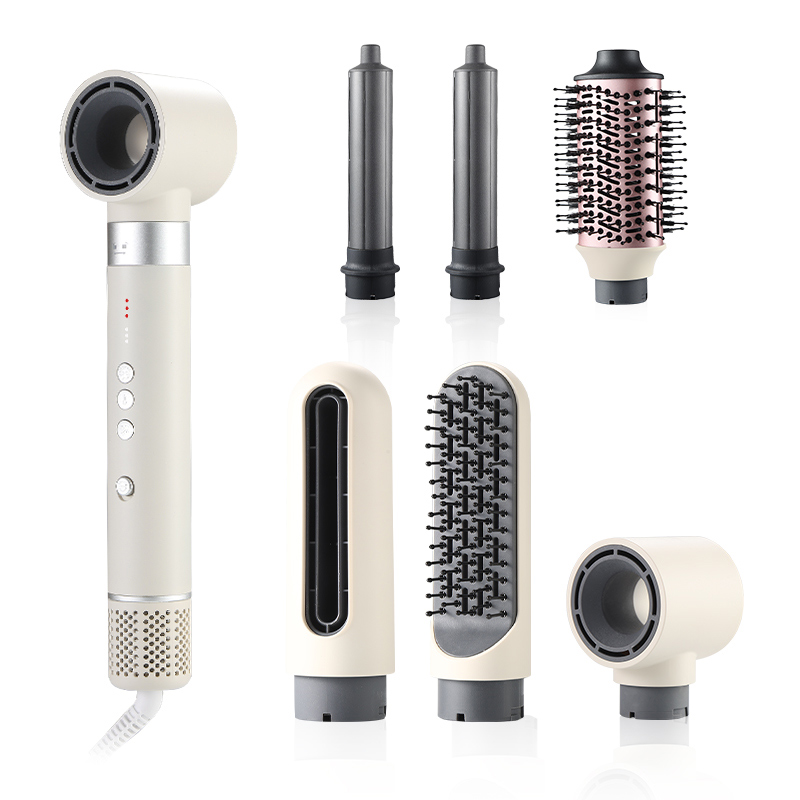
Air stylers combine a fan motor, a heating element, and several interchangeable heads in one body. Instead of holding a dryer in one hand and a round brush in the other, you dry and shape using the same device. Multi-head air stylers built on BLDC motors keep the barrel compact while adding enough airflow to lift hair at the root, the part most round-brush beginners struggle to achieve.
A well-designed air styler makes the blowout approachable: airflow and a heated barrel work together to wrap sections of hair, and the head shape decides whether the result is a bend, a curl, or smooth volume. If one device does several jobs, the limiting factor is usually the motor; a weak motor cannot hold airflow when the brush head presses against the scalp.
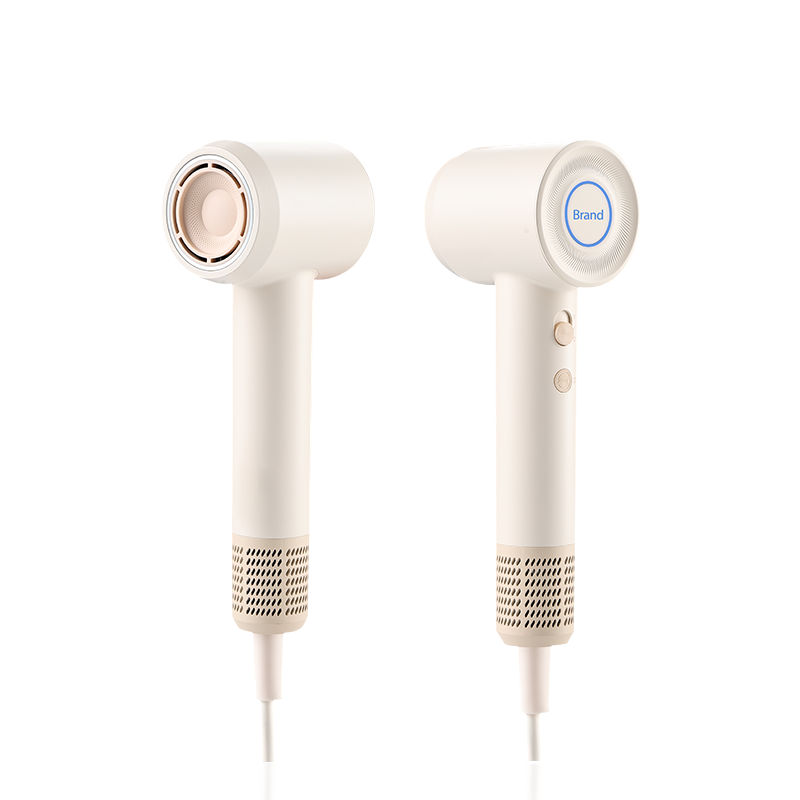
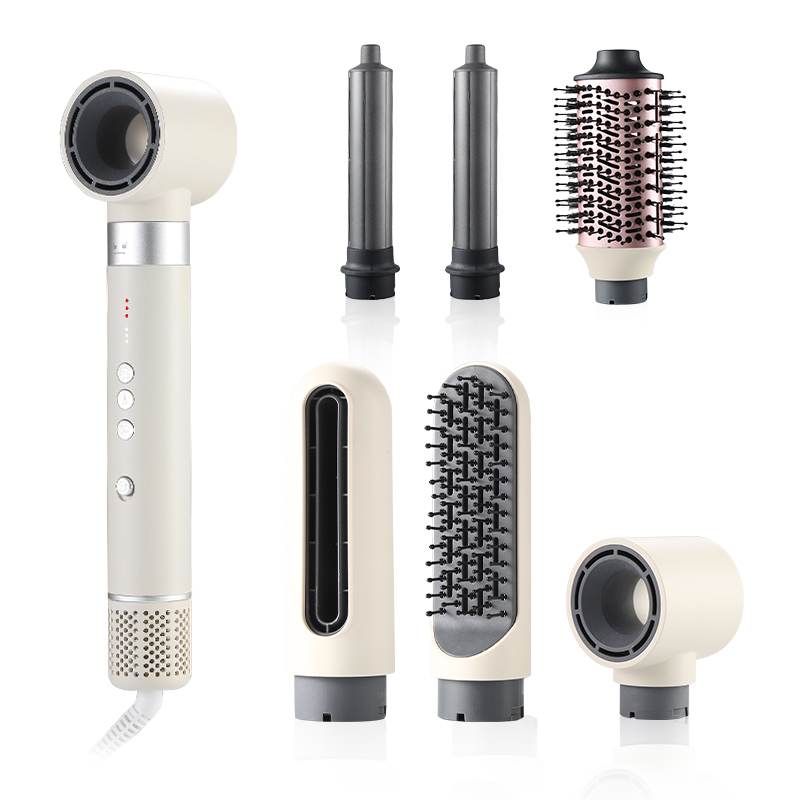 711A Multi-Head High-Speed White Hair Styler with LED Display This multi-head styler combines a powerful 1300-1500W motor with interchangeable heads, addressing the paragraph's concern about weak airflow. Its even weight distribution and LED display make it a practical all-in-one option for streamlining morning routines and SKU planning. View Product →
 That is why engineering has moved toward one high-speed base with interchangeable heads. A multi-head BLDC styler can switch between a drying nozzle, a volumizing brush, and a smoothing head without changing weight distribution. For the user, it shortens the morning routine and reduces counter clutter; for a brand evaluating private-label options, it also simplifies SKU planning.
High-Speed Dryers: The Daily Workhorse
If you buy only one hair styling gadget, a high-speed dryer is the most rational choice. It handles the most frequent task, drying hair, with less heat damage in less time, and it becomes the foundation that other styling tools build on. The specifications that matter are motor speed, air velocity at the nozzle, and the responsiveness of the heating system. A dryer with smart temperature control reduces power the moment airflow is blocked, which prevents hot spots on the scalp.
High-speed dryers are also where factory engineering quality shows most clearly. The motor must be balanced, the heater durable, and the airflow path leak-free before it reaches the nozzle. For professional users, handle balance and noise matter as much as wattage; negative-ion generation, LED displays, and memory settings are standard at the upper end.
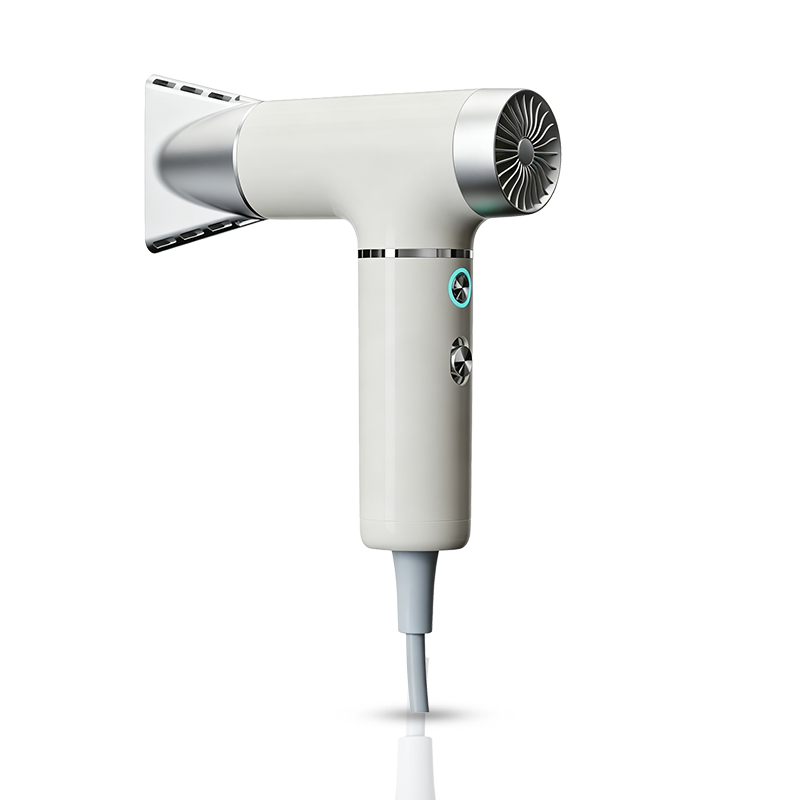
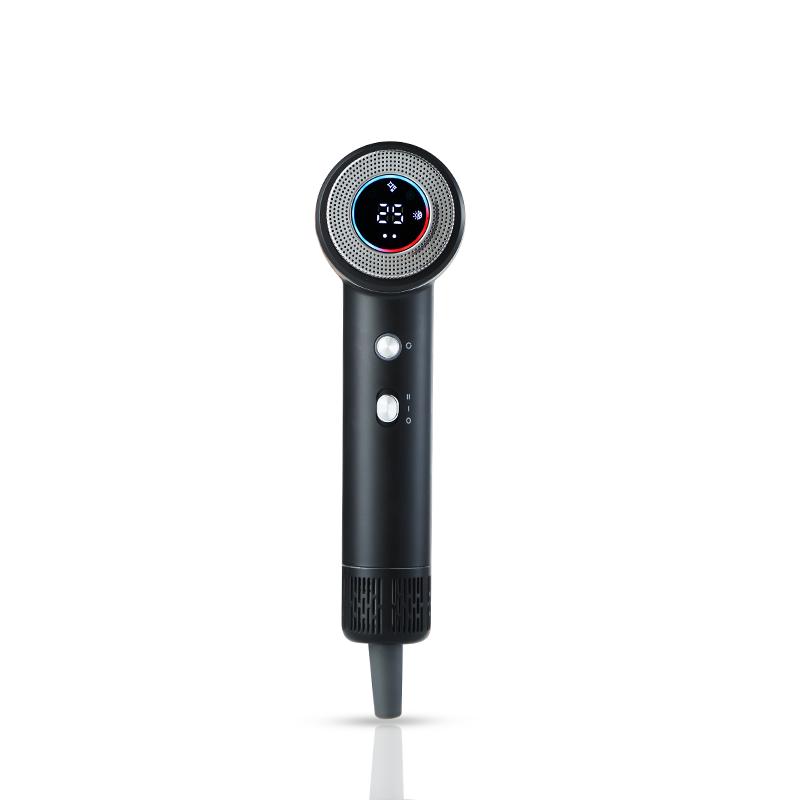 AU707A Smart LED Display BLDC High-Speed Ionic Hair Dryer Featuring a BLDC motor, billion-level ions, and an intelligent LED temperature display, this professional-grade dryer delivers rapid drying with minimal heat damage. Its low-vibration design and voltage options suit salons and global distributors seeking high-tech performance. View Product →
 A unit with a smart LED display and ion function shows how far the category has moved from the simple hot-air tube of a decade ago. The takeaway is simple: compare air velocity and temperature stability first, not the number of switch positions or the colour of the shell.
Cordless Curlers and Specialty Styling Tools
Cordless styling tools have moved from a convenience novelty to a serious segment within hair styling gadgets. A cordless automatic curler uses a motorised barrel that pulls in a section of hair, heats it, and releases it as a curl. This removes the hardest part of curling for many users: wrapping hair evenly around a hot barrel while managing sections with one hand.
Wireless charging is the enabler. Without a cable, the device fits in a handbag, works at the office, and travels without voltage-adapter concerns. The trade-off is battery weight and runtime, so the better units keep batteries low in the handle and heat the barrel quickly; our guide to using a curling wand for long-lasting curls covers the technique side.
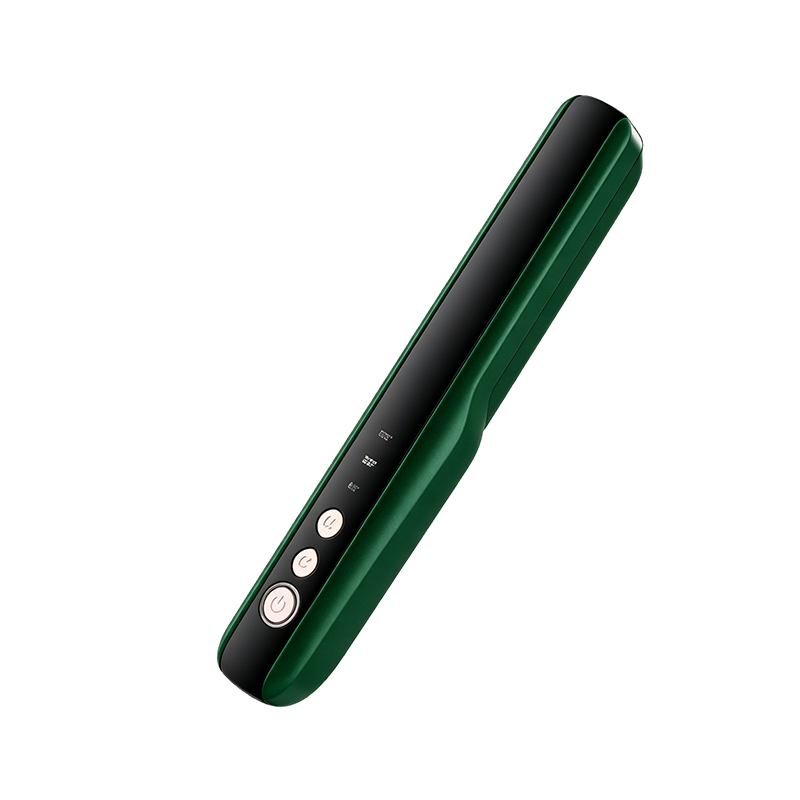
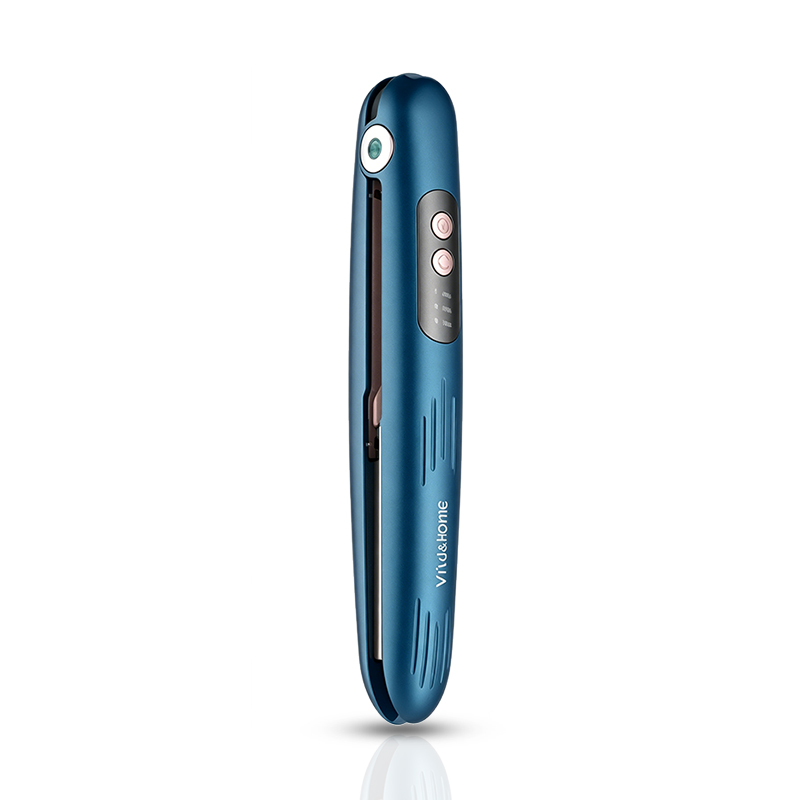
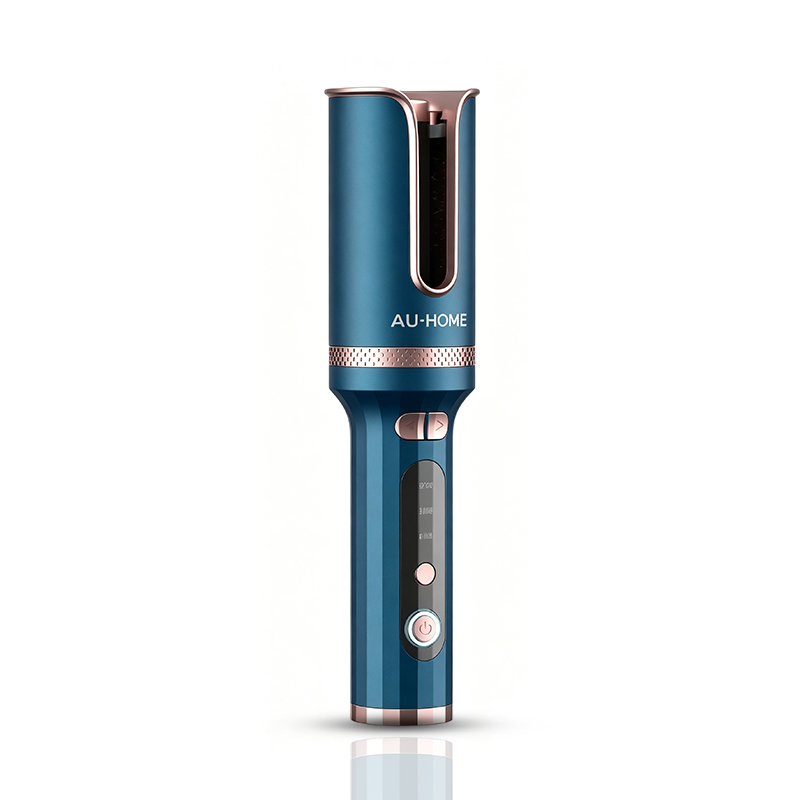 502 Smart Wireless Charging Hair Curler with Digital Temperature Display This cordless curler with a 4800mAh battery and three heat settings is perfect for on-the-go styling, fitting the paragraph's emphasis on portability. Its 12-second auto shutdown and Type-C charging add safety and convenience for travel or office touch-ups. View Product →
 Specialty tools fill narrower jobs: spray straighteners that combine moisture and heat, dual-effect straighteners that switch between straightening and waving plates, and wireless massage styling combs for scalp stimulation while shaping. These are rarely the first purchase in the category, but they make sense as a second or third device once the daily routine is covered.
What Commercial Buyers Should Check Before Placing an Order
Retailers, brand owners, and importers evaluate hair styling gadgets through a slightly different lens. The consumer questions about airflow and heat still apply, but four additional checks cover most of the commercial risk.
- Motor strategy. Ask which motor types the factory integrates, BLDC or conventional DC, and how the motor is matched to the heater. A factory that has designed around BLDC motors for years brings validated tooling and failure data that a newcomer lacks.
- Certifications and market entry. CE and CB are common baselines; GS, ETL, and UL matter for specific channels. System certificates such as BSCI and ISO 9001 signal consistent process control.
- ODM flexibility. A partner that adapts an existing certified tool's colours, interface, and accessories while preserving safety margins shortens development cycles considerably.
- Lab and testing depth. An in-house product laboratory is the difference between catching a defect before shipment and discovering it after units reach store shelves.
These checks matter because manufacturing cost does not scale linearly. Small changes to the heater, motor controller, or attachment geometry can create large shifts in reliability. A factory that has gone through certification, mass production, and field failure analysis on its own products is a safer partner than one that only assembles to drawings.
Choosing the right hair styling gadget comes down to the same three priorities at any price level. Motor type determines airflow, and airflow determines how much heat your hair has to endure. Temperature control determines whether that heat is steady and predictable. And the device format determines whether you will actually use it weekly instead of letting it gather dust. Ask those three questions, and the rest of the specification sheet becomes much easier to interpret.
- 711A Coiffeur multi-têtes pour cheveux blancs à grande vitesse
- Sèche-cheveux haute vitesse intelligent à contrôle de température AU750B
- Peigne de massage sans fil 805
- Lisseur à cheveux intelligent sans fil à double effet 602
- AU709C Sèche-cheveux BLDC haute vitesse avec mode soins pour bébé
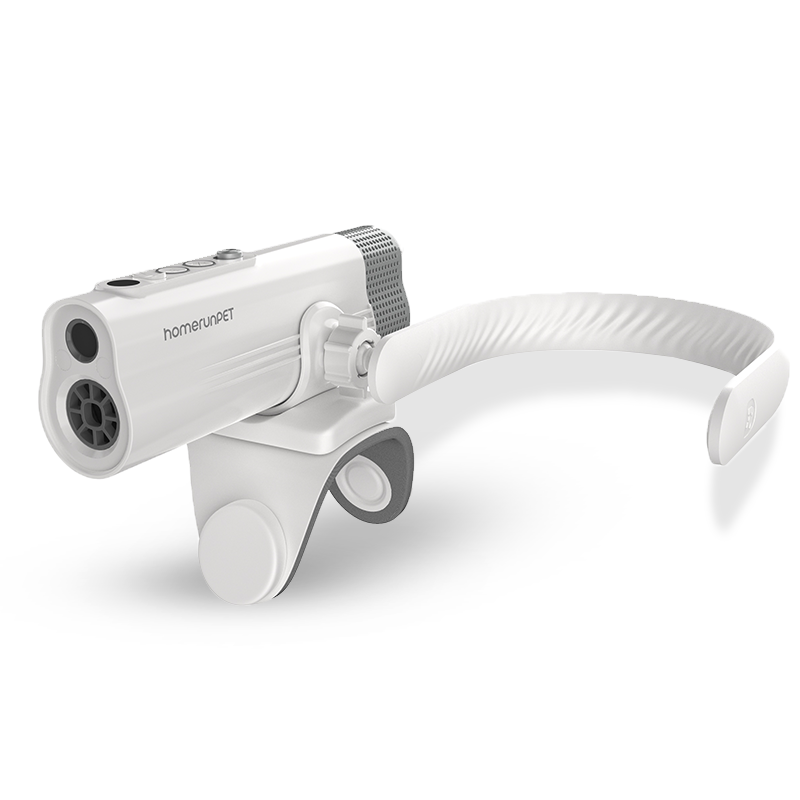
- Sèche-linge mains libres pour animaux de compagnie AU712, monté sur l'épaule
-
Gadgets de coiffure pour les marques OEM/ODM : guide de sélection et de fabrication
Lorsqu'un chef de produit d'une marque de soins personnels s'assoit pour examin...
-
Appareils de coiffure : types, technologie et choix d'un partenaire de fabrication
Lorsque vous récupérez un appareil de coiffure, les informations les plus importantes sont sou...
-
Comment utiliser une baguette à friser pour des boucles parfaites et durables
Guide de coiffure professionnel Comment utiliser une baguette à friser po...
-
Choisir le sèche-cheveux domestique idéal : un guide d'achat complet
1. Comprenez votre type de cheveux Différents types de cheveux nécessitent une ch...
-
Produits et appareils électriques de soins personnels : Guide d’achat 2025
Que sont les produits de soins personnels ? Comprendre la catégorie La décision d'a...
-
Un Air Styler en céramique est-il meilleur pour le curling et le soin des cheveux
Centre de connaissances en coiffure Comment un Styleur d'air en céra...
- Accueil Produits À propos Service Actualités Contacter
- Produits de soins personnels Appareils pour animaux de compagnie
-
- Courriel : [email protected] Téléphone : +86-137 7710 9088 Ajouter : Parc industriel de la ville de Henghe, ville de Cixi, province du Zhejiang, Chine
-
Contactez-nous à tout moment pour des solutions exclusives
